What if We Used Proportional Fonts for Code Blocks?
Pop Quiz, Hotshot
What's easier to read?
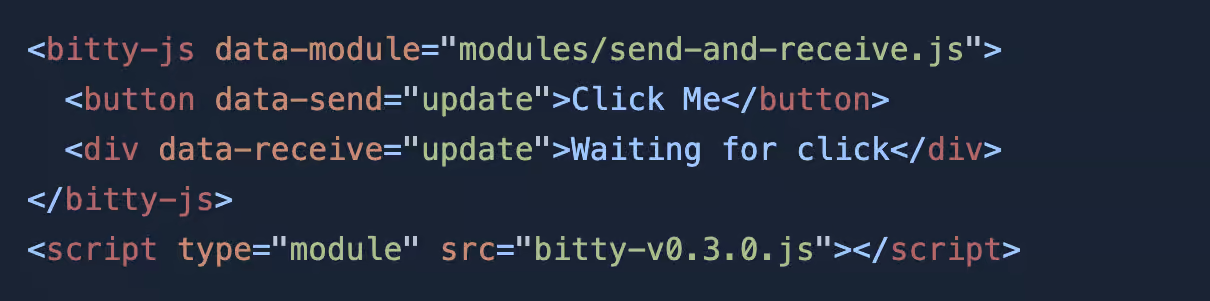
or
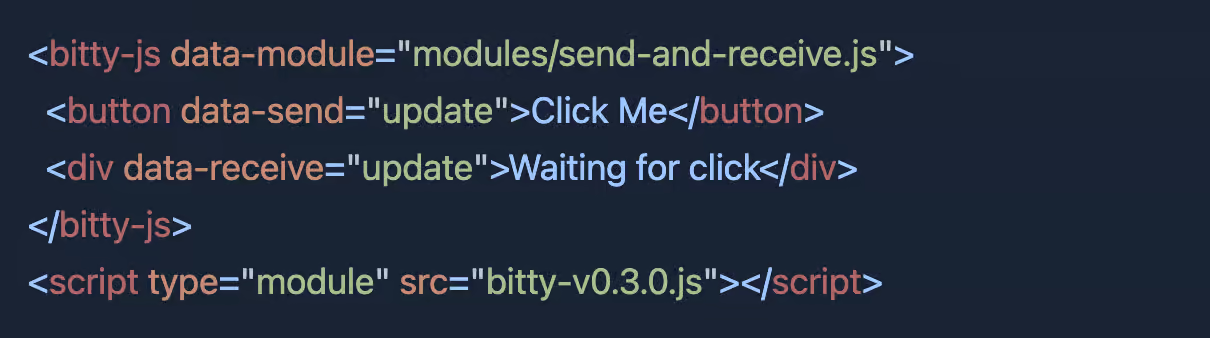
It's the second one, right?
What Changed
The only difference is the font. The first one is a monospace font. The default for tags in HTML. The tags generally used to display source code. The second is a proportional font. The kind used for pretty much everything else.
Monospace fonts are great for writing code. Press the up arrow and the cursor goes to the character directly above. With a proportional font, it jumps from side to side1.
The up arrow thing isn't important for reading code.
Room to Spread Out
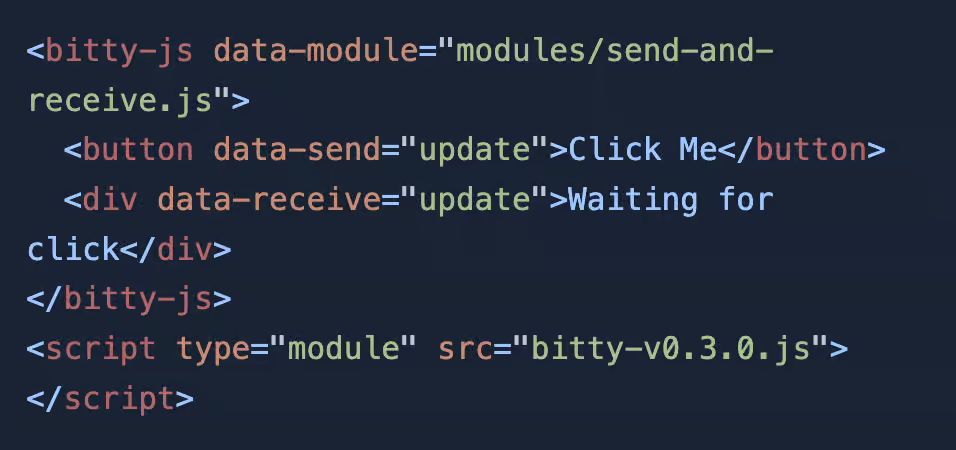
Proportional fonts also allow for longer lines.
Monospace:
Proportional:
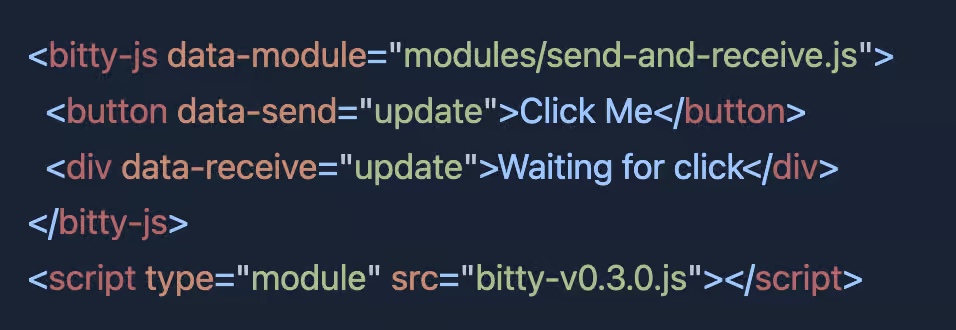
Same text, but the lines with data-module and data-receive wrap onto the following line with the monospace font.
Letting the Newness Ware Off
My old jazz instructor had a saying:
You don't like what you don't know.
My corollary:
You don't like it cause it's new.
It's all to easy to not a like thing just because we haven't had much exposure to it.
I tried flipping to proportional fonts for code blocks before. I didn't like it. I'm pretty sure that's because it was new. After a few decades looking at monospace code, the proportional fonts felt wrong.
I'm playing with them again. Letting the newness ware off. The more I do that, the more I like them.
-a
Endnotes
The proportional font size is a tiny bit bigger than the monospace font. You could fit even more text in if they were the same size.
References
Also called "variable-width" fonts
Footnotes
Take a look at the first two examples to get an idea of what I mean about the cursor jumping side to side.
The second and third lines start with:
Those snippets both have 27 characters. In the monospace sample, the ">" character of each line is stacked vertically. It's offset in the proportional version. So, pressing the up arrow wouldn't necessarily take you to the character you want.