What is Peek Performance?
I've been thinking about this thread from Mastodon. It looks at peek performance through two filters of practice:
- Intensive discipline-specific practice with accelerated early progress
- Extensive multi-disciplinary practice with gradual early progress
The graph in the thread shows that discipline-specific practice leads to higher performance earlier in life. The multi-disciplinary approach catches up and takes the lead later in life.
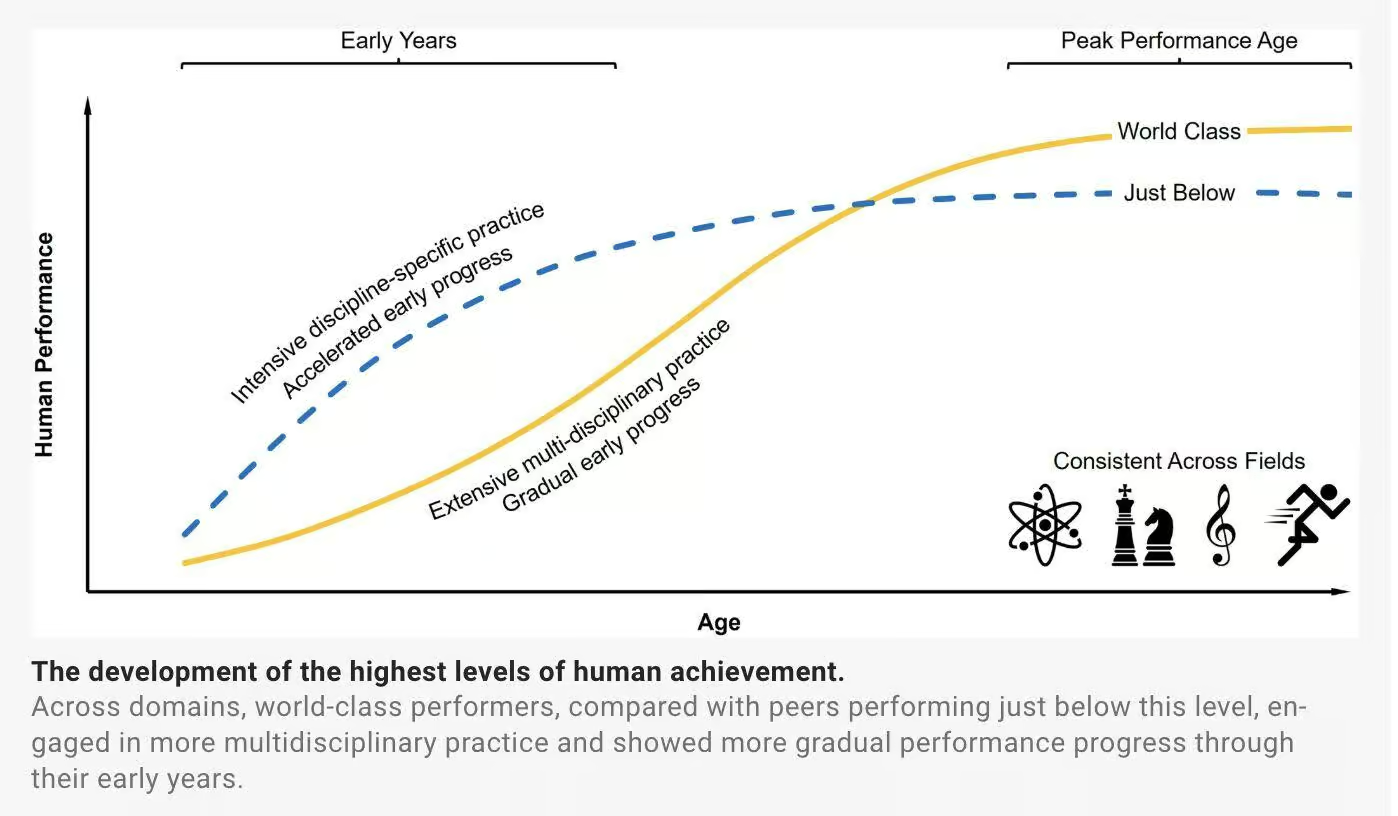
This got me thinking about peek performance when it comes to coding. I realized my mental model of measurement doesn't fit.
Code / Golf
I spent a couple decades working at the PGA TOUR. When I think of performance, I think of leaderboards. It's tough to find a purer form of measurement. There are 72 holes in an event. The person who hits the ball the fewest number of times across them wins.
There's hundreds of other performance stats you can look at. Ultimately, none of them matter. You can be middle of the pack in every single one, swing your club fewer times than everyone else, you win.
How do you measure peek performance when it comes to coding? In fact, how do you measure performance of a developer at all?
Having a good idea? Having lots of good ideas? Being good at building one type of thing? Being good at building anything? How many lines of code you write in a day? How few you write to get something done? Just being able to bulldog an issue until you figure it out?
After you finish setting your criteria, how do you set the scale? What is a good idea? Does speed of building something matter? Is it how much the software gets used? How many bug reports come in?
Language Arts
Writing about music is like dancing about architecture.
-- Traditional
Coding is closer to painting than golf. Entire categories of the endeavour that don't have an analogy in a single sport. Front End, Back End, Database Admin might as well be Impressionism, Expressionism, and Realism. They each apply paint to canvas the same way code creates an app. The similarities end there.
You have to increase a sports analogy's scope for it to hold shape. Maybe add archery and curling, for example. That still misses the mark, though. Each sport has defined rules and regulations that normalize individual performances They can be measured against each other directly. Arguing whether or not van Gogh tops Monet is a subjective endeavour. Even defining the criteria on which to judge is a lesson in argumentation.
There's also the small matter that only the exceptional are exceptional. How does someone even being to approach the rarefied air?
Picking Both
And so we land at Nature vs. Nurture. Positioned against each other, the implication is one or the other determines our fate. A false dichotomy, if ever there was one.
- Nature sets your limits.
- Nurture determines how close you come to reaching them.
I'm equating "nurture" here to environment. If you're in an environment that provides the time, energy, headspace, and resources to practice, then your fate is your own.
If your environment works against you, you're pretty screwed. Your efforts go into making space to practice instead of the practice itself. Assuming you're provided the opportunity to practice at all.
Sooo....
Examining how the best of the best got to where they are is fascinating. But, exploring the fine tuning that pushes folks just below world class up the final notch is focusing on the edge of the map.
There be dragons.
In the worlds of art and code, it's hard to imagine seeking wider horizons isn't the best way to go. But, you gotta start where you are. You gotta put in the reps. Without the work, the horizons don't matter. You'll never move towards them.
Peek performance require practice more than anything else.
-a
Endnotes
I'm not sure what study the graphic is from. It kinda doesn't matter for this post since the topic ends up being about practice. I'll add the details if I find them.